Pakistan- Saudi Arabia relations: Historical perspective and current challenges
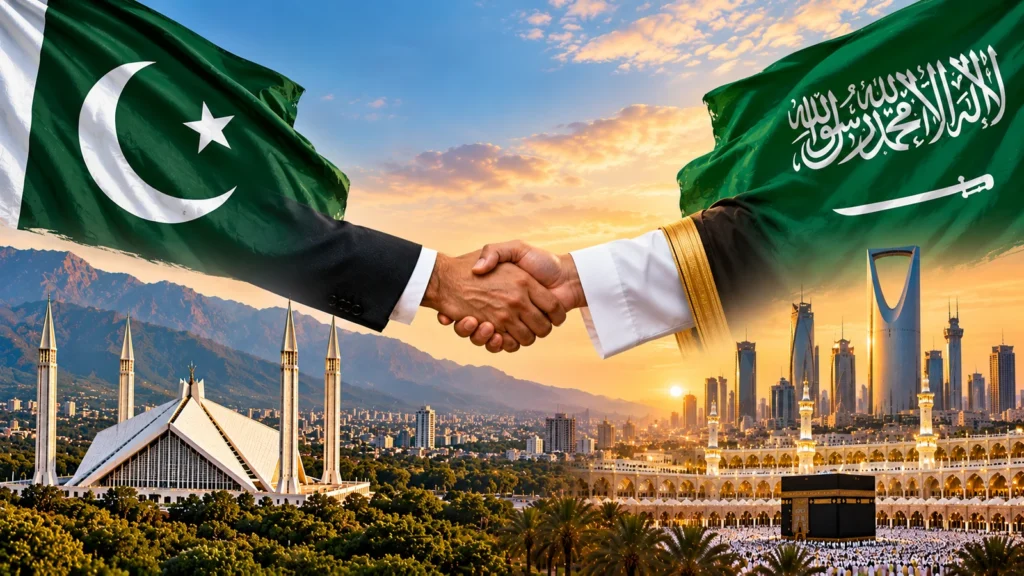
Pakistan and Saudi Arabia share longstanding diplomatic, economic, religious, and strategic ties, facing new challenges in an evolving regional and international environment.
Since independence of Pakistan both countries maintained close diplomatic relations based on shared religious values ,economic cooperation, defense collaboration and mutual diplomatic support. with the passage of time religious connections have developed into broader strategic partnership. However, regional conflicts, differences in foreign policy and changing international alliances have created challenges for both countries. Therefore, relations of Pakistan and Saudi Arabia can be best understood as a long standing partnership often evolve in accordance with regional and global circumstances.
Diplomatic relations between Pakistan and Saudi Arabia began shortly after the independence of Pakistan. Abdulaziz’s kingdom and Pakistan developed friendly relations through religious solidarity, diplomatic engagement and economic cooperation. Pakistan always supported kingdom’s interest in response Saudi Arabia became an important partner for Pakistan in the Muslim world.
During 1960s, relations expanded through defense collaboration. Saudi Arabia valued Pakistans military experience,while Pakistan sought stronger relations with influential Muslim countries.These early interactions paved the way for long lasting bilateral partnership. The 1970s marked an important phase under prime minister Zulfikar Ali Bhutto, Pakistan strengthened its engagement with Muslim countries, particularly during the 1974 Islamic summit conference in Lahore.
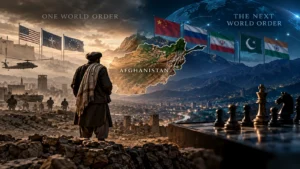
During 1980s, the Soviet invasion of Afghanistan transformed the regional security dynamics. Pakistan and Saudi Arabia supported afghan resistance groups ,while their strategic interests increasingly overlapped with those of united states. according to Madiha Afzal’s research published by Brookings in 2019, Saudi influence in Pakistan increased considerably following the Iranian revolution and Soviet invasion of Afghanistan. These events also strengthened strategic and ideological connections between the two countries.
Furthermore, following the cold war ,Pakistan and Saudi Arabia continued cooperation in defense ,trade energy and diplomacy. Both are members of US alliance. Saudi Arabia remained an important source of employment for millions of Pakistani worker’s, whose remittances contributed significantly to Pakistan’s economy.
However, the relations was not without difficulties. Pakistan had to balance its relations with Saudi Arabia and neighboring Iran. Pakistan also faced challenges in responding to conflicts in the middle east while protecting its own national interests.
Current challenges in Pakistan- Saudi Arabia relations:
One of most prominent challenge is Pakistan’s economic dependence on Saudi Arabia. Financial deposits ,oil related facilities, and other forms of assistance have helped Pakistan manage periods of economic pressure.
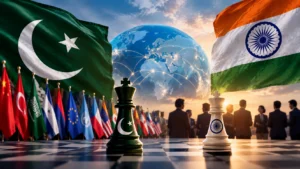
Defense collaboration remains a key pillar in Saudi -Pakistan relations .Pakistan has provided military training and other forms of defense cooperation to Saudi Arabia over decades. A significant development occur during 2025, when the two countries signed a strategic mutual defense agreement. This agreement strengthened their bilateral defense ties and influence security dynamics across the middle east and south Asia.
Moreover, maintaining balanced relation between Saudi Arabia and Iran is another major challenge. Both states prolonged regional competition and differences in ideology. Pakistan shares a border with Iran and has important security ,economic and geographical interest in maintaining peaceful relations with Tehran. Resultantly, openly alignment with one country against other could undermine Pakistan’s regional stability.
Pakistan should promote dialogue, peaceful conflict resolution and regional cooperation rather than becoming directly involved in rivalries between its partners.
The Kashmir issue has occasionally created frustration in Pakistan’s relationship with Saudi Arabia. Pakistan has sought stronger diplomatic support from Muslim countries, particularly through the organization of Islamic cooperation( OIC). However, Saudi Arabia also maintains importance economic and strategic relations with India. Its broader regional interest mean that its foreign policy does not always correspond with Pakistan’s expectations.
Saudi Arabia’s vision 2030 aimed to diversify its economy and reduce dependency on oil revenues.
This create opportunities for Pakistani job seekers in skill employment, information technology, agriculture ,tourism and investment. However, Pakistan must improve economic stability , professional skills ,governance ,and investors confidence to benefit from these opportunities. Both countries diversify the trade relations, improve educational cooperation and develop joint investment projects. Such measures would help to transform their partnership from one heavily influenced by financial assistance and defense cooperation into more balanced economic partnership.
Conclusion
Pakistan-Saudi Arabia relations evolved from religious and diplomatic engagement into a strategic partnership encompassing defense, economic assistance ,employment ,and regional diplomacy. Nevertheless, economic dependence ,regional rivalries , differences over Kashmir , and risks associated with defense commitments remains significant challenges. Therefore, future of this relationship depends on mutual respect, economic diversification, transparent cooperation ,and balanced foreign policies. Pakistan should preserve its close relations with Saudi Arabia while maintaining constructive relations with Iran and other regional countries. A stable and mutually beneficial relationship would serve the national interest of both countries and contribute to peace and cooperation across Muslim world.