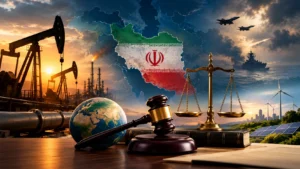
From Chokepoint to Bypass: Are Gulf Pipelines Going to Render Hormuz Strategic Value?

Gulf pipeline networks offer alternative energy export routes that could reduce dependence on the Strait of Hormuz, while reshaping regional energy security.
The Gulf oil suppliers are rushing to construct pipelines bypassing the Strait of Hormuz. Such projects will reduce the strait’s role in exporting oil in the region but will not change its importance within two years.
On 1 September 2026, speaking at a G20 finance meeting, US Treasury Secretary Scott Bessent said that Gulf producers were constructing pipelines on land so fast that the Strait of Hormuz would lose its value in two years’ time. This statement has received widespread attention because it aligns with the American narrative about the Gulf alternative to Iran’s and the solution to the bottleneck issue. However, the statement is half-true: its direction is right; its timing is excessively optimistic, and its notion of value is too limited.
It is the magnitude of the stakes involved that makes this statement important. According to the Congressional Research Service, in 2025 the strait saw one-quarter of all the maritime oil and products shipments in the world, which amounted to about 20 million barrels per day and about 19 percent of all global LNG shipments. With the beginning of US and Israeli military action against Iran on 28 February 2026, Iran declared the strait closed and attempted to force ships to navigate through Iranian territorial waters. A ceasefire on 7 April and a US-Iran memorandum on 17 June offered some respite. New strikes at the beginning of July put an end to that memorandum, and Washington reinstated its naval blockade. Prices responded accordingly. According to CRS, oil grew by roughly 50 percent from February to May, while European and Asian gas prices saw a 44 and 66 percent growth respectively.
It is evident that the bypass route is very attractive because the East-West pipeline in Saudi Arabia could transport about 7 million barrels a day between Abqaiq and the Red Sea coast at Yanbu. The nameplate capacity of Habshan-Fujairah pipeline (ADCOP) of UAE is 1.5 million. This dependence of the UAE on ADCOP is confirmed by Kpler’s in 2025, this pipeline carried roughly 30 percent of all UAE crude loadings, and almost 80 percent in April 2026. ADNOC is currently constructing a second pipeline to Fujairah, the project being valued at $3 billion and 300 kilo meters long. It was said to be completed by early 2027 and 50 percent complete so far, with Kpler’s expects forecasting the UAE bypass capacity growing from 1.8 to 3.6 million barrels per day. As stated by Seatrade Maritime, the bank estimates that the existing projects could add 3.8 million barrels per day of bypass capacity by the end of 2027 and 7.3 million by the end of 2028.
These calculations explain why two years is not enough time: Only around 45% of Gulf exports will bypass Hormuz by the end of 2027, while 60% a year later, or even 75%, provided that construction goes fast. This means that more than 50% of regional exports will still pass through the strait when it is expected to become obsolete for Bessent, and 40% after another year. A fourth of all barrels is far from being a bottleneck anymore. However, even this number cannot be achieved physically, because a pipeline just brings the oil to the port, which should load it. According to Kpler, sustainable capacity for exports from Yanbu does not exceed 4.5 to 5 million barrels per day, while the pipeline’s capacity is 7 million, so the completion will have to wait until mid-2027.
There is a gap other than terminals. The projects which are being done are primitive and products, and there is no bypass for Qatari LNG. Qatar is responsible for almost 20 percent of global LNG exports, and according to reports published by Reuters in Pipeline and Gas Journal, all of it passes through the strait. Qatar Energy declared force majeure in March following attacks at Ras Laffan, and CRS mentions that about 19 percent of global LNG exports would be unavailable if the interruption continues. Iraq is facing the same issue. CRS cites Iraq as one of those states that are most dependent on the strait, and its alternatives like the Kirkuk-Ceyhan route via Turkey are very limited. Therefore, a pipeline map that may look promising for Riyadh and Abu Dhabi is of little help for Doha and Baghdad.
Even if constructed, the pipelines will just transfer the danger elsewhere. According to CRS, they will not diminish Iran’s influence over regional infrastructure, since Iran has already attacked the UAE and Oman in May. The city of Fujairah lies in proximity to the war-torn region. The Red Sea pipeline has got risks of its own because there have been strikes against Saudi vessels by the Houthis, leading to increased attention to Bab el-Mandeb chokepoint and oil exceeding the price of $100 on 23 July.
What is at stake is the definition of strategic value. For Bessent, it is measured in barrels; for tanker owners and insurers, in fear. CRS explains that threats alone can lead to closure where risks outweigh the benefits to the tankers, an issue that the US has failed to consider due to fear of attack. The Persian Gulf Strait Authority was put up in Iran to facilitate the transit process, which received sanctions from the US on 27 May. Having pass through rights provides an advantage that a pipeline does not have. This is explained in terms of realism in that bypassing through the pipeline is self-help.
Another dimension that the bypass theory tends not to address is the dimension of interdependence. In their analysis, Keohane and Nye defined sensitivity as the speed at which the shock moves from one economy to another whereas vulnerability refers to the cost of getting away from the shock. The bypass project will lower the Gulf’s vulnerability only in the long run. However, sensitivity will not change much because of the fact that the oil price is globalized, and the Gulf shock affects the price in all other importing countries. Even the coordinated effort by the International Energy Agency to release 400 million barrels from strategic reserves was only a temporary solution to the problem.
Legally, arguments speak against the claims by Iran. First, Article 38 of the Part III of UNCLOS gives the right of transit passage through straits used for international navigation and further states that right of transit passage shall not be impeded. Second, Article 44 says that the states bordering on such straits should not impede transit passage. The permit requirement infringes on international law, since part of the strait is situated in Oman’s territorial waters, and according to CRS, the demand “is unprecedented.”
Iran is a signatory but not a party to UNCLOS. Bessent’s prediction appears political rather than energy-related – by 2028, around 60% of Gulf’s exports before the war will be moving without using Hormuz, although the LNG issue, insurance and legal issues will retain its relevance. There are three key determinants: the newly built ADNOC pipeline and Fujairah facilities by 2027, exports from Yanbu exceeding 5 million barrels per day, and a four-party US-Iran-Oman-Gulf deal. The problem is who controls Hormuz once it is no longer worth anything.