Sustainable Aviation Fuels: Transitioning Towards Green Aviation
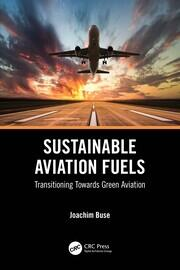
Author: Joachim Buse
“Sustainable Aviation Fuels: Transitioning Towards Green Aviation” authored by Joachim Buse is an endeavour to explore one of the most pressing challenges of the aviation industry: achieving eco-friendly air travel with less emissions.
This book was written in the context of the need for decarbonisation, lifting of travel restrictions post-pandemic, and the achievement of the International Civil Aviation Organisation’s (ICAO) net-zero 2050 target. For the latter, the target is for 63 per cent of the emissions to be offset by Sustainable Aviation Fuel (SAF). Subsequently, this book makes the case for how aviation can gradually shift towards Green Aviation by transitioning from fossil-based JET A-1 fuel to SAF by underscoring this transformation’s need for regulatory frameworks and proactive engagement from airlines and fuel producers alongside state governments.
Buse’s academic expertise in Infrastructure and Resources Management, coupled with his professional experiences at Lufthansa German Airlines in various capacities – Deputy Vice President and CPO – and later as a SAF-focused consultant after co-founding Aviation Initiative for Renewable Energy in Germany, make him an authority on the subject.
The urgency to transition towards SAFs is palpable throughout Buse’s work as he deems it the only viable option to achieve long-term emissions reductions and the achievement of the net-zero target by 2050. To this effect, the central argument is that only a complete shift in fuel type can meaningfully decarbonise aviation. This is because alternative propulsion technologies, such as, hydrogen-based engines using liquid hydrogen and battery-powered electric engines are still in the nascent stages of development and continue to face limitations of on-board compressed hydrogen storage and battery energy storage respectively, making them decades away from commercial viability.
The book begins by establishing the combustion of fossil fuels in the aircraft engines as the primary cause of environmental damage done by the aviation industry. This can be attributed to the release of carbon dioxide (CO2), nitrogen and sulphur oxides, soot, and contrails, with the latter significantly contributing to global warming. It has been noted that the decade 2009-2019 saw a 44 per cent increase in jet fuel consumption. This rise came in spite of environmental efforts made by airlines to improve fuel consumption through fleet renewal and calls to upgrade the government-controlled air traffic control.
Interestingly, it was after an expected reduction in the availability of oil products following the oil prices’ peak in 2008, in addition to the environmental NGOs and green activists calling for reduced aviation emissions, that research began into alternative aviation fuels. However, it has been acknowledged that they are not 100 per cent emission free as their effective emission reduction is only between 70 and 95 per cent.
A major theme evident in the book is the economic structure of the oil market. The author notes its oligopolistic nature, meaning a small number of oil suppliers dominate it. This has caused price inelasticity due to an absence of alternatives and made airlines price-takers in a highly unpredictable system. This volatility stems from external factors such as natural disasters, piracy, or the profitability of refineries that price jet fuel relative to other oil products. Moreover, speculative pricing and formula contracts have made airlines absorb high fuel costs through increased ticket prices, representing their powerlessness over supply chains and pricing mechanisms.
This allows Buse to offer SAF as a gamechanger for aviation due to its different production pathways that introduce new players in the fuel market, subsequently providing liberation from speculative-driven prices. In this regard, Buse identifies the cost-plus model in practice between SAF producers and purchasers, wherein the price is predicated on the cost of production in addition to a percentage markup for profit.
For the past six decades, the aviation industry’s practices and infrastructure revolved around JET A-1. This has led to defined market rules and optimised global supply chains. Also, based on the energy content provided by JET A-1 the design and layout of the latest turbofan engines, maximum take-off weight, and the runway length have been determined. The sole reason for moving towards a non-fossil replacement is the environmental repercussions caused by JET A-1. This transition towards renewable fuels requires billions of dollars in investment to overhaul the current system to develop new technologies and SAF production facilities. For example, converting used cooking oil, suitable vegetable oil, and animal residues through a Hydrotreated Esters and Fatty Acids (HEFA) refinery with the yield of 800,000 tons SAF requires a total investment of 1.1 billion USD.
Such high production costs, in addition to feedstock constraints wherein biomass feedstocks are limited and raise the dilemma of food versus fuel, have caused less market penetration of SAFs. Thus, the demand for SAF has been artificially created through external interventions in the form of government subsidies and incentives – Blender’s Tax Credit in the US and the EU’s Renewable Energy Directive III mandating EU states to oblige the distributors of JET A-1 to blend a given percentage of SAF that increases every five years.
Outlining strategies for SAF’s entry into the market through eight different approaches, encapsulating supply-side implementation, regulatory requirements, and demand, Buse ends his book on an urgent note: contrails and greenhouse gases produced by the aviation sector contribute more to global warming than CO2, and the only viable option to combat that is switching to SAF.
In his book, Buse does not provide sufficiently convincing arguments to demonstrate that SAF is better than JET A-1 fuel, aside from its environmental benefits, whilst acknowledging that SAF has no unique selling point. This is because air transport can continue operations with cheaply produced JET A-1 as long as emissions are offset through other means, such as planting trees. The absence of examples where the SAF performs better than JET A-1 in parameters other than the environment is also glaring. For instance, a study has shown that SAF produced from multiple feedstocks in a hybrid biorefinery model had superior aircraft performance than JET A-1. It outperformed in thrust and range while also lowering fuel costs – aspects that can market SAF better than sole reliance on reduced environmental footprint.
In another instance, Buse presented optimism that SAF would bring new entrants into the fuel market; however, concurrently, he admitted that over time, the SAF market can become oligopolistic because only a handful of producers can scale SAF’s production because of the limited number of approved production pathways and high capital requirement, favouring existing players to compete globally. Therefore, as predicted by him, already established players in the jet fuel supply chain, such as Shell, have invested in the production and supply of SAF to its wide-ranging customer base. The company also signed a deal with Emirates in 2023 under which it supplied 315,000 gallons of blended SAF at the airline’s hub in Dubai. This is a further illustration that for airlines, these prominent brands are a confidence-building measure that will give competition to new entrants.
The book is premised upon decarbonising the aviation industry and transforming it into green aviation. Yet, critical questions are not posed to assess whether SAF is actually sustainable – not accounting for ethanol industry’s lobbying to use crop-based biofuels in the US to earn SAF tax credits or greenwashing tactics deployed by producers to establish that the production of their feedstock complies with regulatory measures in place to make environmentally friendly fuel – or exploring other viable options to make aviation greener. This makes the book come across as marketing for SAF, which is unsurprising given the author’s personal stake in SAF’s success.
Buse’s work has focused on the US and the EU in terms of pricing models, mentioning the global South only when it came to the cultivation of crops to be used in the production of SAF. This has made the book Western-centric. Additionally, more value could have been added to the book through primary research, where Buse could have conducted interviews with stakeholders such as airlines and oil producers around the world to understand their perspective on SAF and their outlook on the achievement of green aviation.
To conclude, “Sustainable Aviation Fuels: Transitioning Towards Green Aviation” is Joachim Buse’s effort to position SAF as the sole solution to combatting high emissions produced by the aviation industry. While the book offers multitudinous aspects ranging from airline considerations to market implementations, the emphasis on this single solution fails to take into consideration the complexities it entails, coupled with an absence of other possible solutions for the achievement of green aviation. The book reads as a technical one, suitable for experts because of its difficult language. Nonetheless, it delves into the intricate realities of aviation fuel economics and supply chain logistics, inviting further discussions on how technology, policy, and relevant stakeholders can come together to effectively decarbonise aviation.