Economic Statecraft and the New Geography of Power in Regional Politics
Mian Masood Tariq December 17, 2025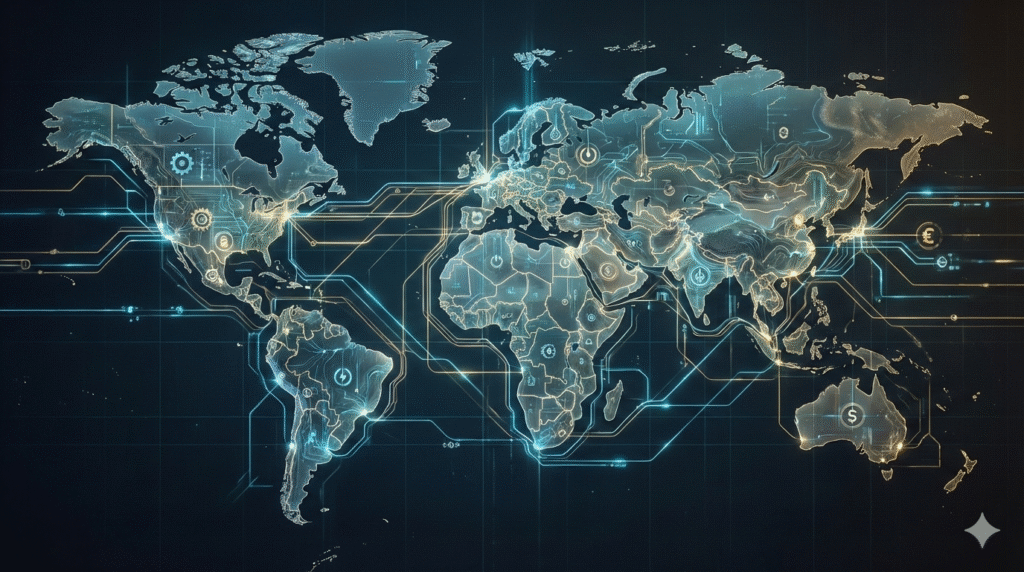
Over the years, the changing nature of strategic competition can be observed across various regional landscapes. The actions of the states are not limited to overt force showing their power. On the contrary, they adopt a multi-layered strategy, which combines precise violent actions, proxy networks, and a long-term plan of economic domination. This mixed strategy is a result of a well-thought-out conviction that the ultimate power is to control the economic main routes of the whole region. The so-called routine investment or development very often has a deeper strategic purpose behind it. Thus, the regional order gets transformed quietly.
These days kinetic actions are seldom the first step in a war. They are rather used to convey a message in a very calculated way. A small-scale air strike, a single naval operation, or a precise raid conducted in the hope of getting a favorable political outcome is not aimed at sparking full-blown conflict. These measures possess a strategic aspect of punctuation rather than being the main plot. They maintain a façade of restraint while simultaneously shifting the operational environment. Hence, the decision-makers find themselves in a situation where the force applied has more of a symbolic than a decisive character, yet it is still a major factor in the battle of perceptions regarding the strength of the parties involved.
Simultaneously, proxy conflict remains a significant means for states to assert their influence without the expenditure of a formal war. Through the backing of armed groups or political factions, states can easily interfere in the internal affairs of neighboring countries with minor investments and without being responsible. These proxies can be used to secure supply lines, shake off rivals’ influence, and take up lands that may later be exchanged. Nonetheless, the effects of this tactic last for a long time. The proxy war has a negative impact on already weak and corrupt regimes that are forced to evacuate their areas and regional trade is rendered even more difficult. It creates situations where it is hard to determine whether there is war or peace.
Still, no matter how conspicuous their presence, military actions, and underground networks are not the most revolutionary forces in the region. The economic power is the one that gets the credit. Today, several governments regard the application of economic pressure as the best means to gain future strategic advantage. Development is the formal reason for such activities as building or upgrading infrastructure, acquiring ports, creating energy or mineral supply lines, and offering strategic loans. On the other hand, this might also be a trap forcing the country to select among the options for decades. So, if a country is to be assisted in its transport, power supply, or IT systems, then that country’s clout will be just like that of a defeated enemy with a small unit left behind.
The attractiveness of being the world’s biggest economy is unequivocal. It does not receive an international outcry as military actions do. It does not even get the “financial exhaustion” that is the hallmark of wars. More importantly, it gets into the political bloodstream of the adjacent countries covertly but steadily. Once it gets implanted, it is hard to reverse the process without incurring huge political and economic costs.
In a lot of situations, economic interests are the main reason for military or proxy involvement. Security is a must for investments. No influence should be allowed to rival the opening of the infrastructure corridor. The proxies may even get extra support in their efforts to either gain control or disrupt regions that are important for the planning of new economic projects. The connection is one that feeds on each other. Economic power gives rise to political influence which in turn gives room for the making of strategic investments. The two factors together create a cycle that is both cunning and strong.
Policymakers who still perceive security solely from the point of view of military might will run the risk of not recognizing the profound change that has taken place. Today, security is no more associated with tanks, naval vessels, and missiles only. It includes the flow of goods, supply chains, data networks, and even the governing institutions. Hence the very first thing to be done is to expand the national security framework to include economic decisions that are perceived as part of the strategic environment. The finance ministries, planning departments, development agencies, and national security institutions must coordinate their assessments, not operate in isolation. The decisions must be made in such a way as to correspond with the integrated nature of competition in the twenty-first century.
The second step is to offer smaller states in the region viable economic alternatives. Warnings regarding strategic dependency do not get the states anywhere, if no options are available, then they would rather choose the among the ones that offer immediate relief rather than the partners that are more vulnerable. Regional investment banks, resilience funds, transparent financing mechanisms, and cooperative infrastructure development can provide the states with a realistic choice. If no credible options are available, partners will continue to move towards the one with the strongest influence.
Third, traditional deterrence has to be redefined and, at the same time, reinforced. The very first thing that should be done is that a believable deterrent posture must be established to counter the threats of the kinetic type. However, deterrent measures should now be considered to be additional to financial regulation, digital governance, and political resilience. Sharing of intelligence is one factor that would assist in detecting proxy networks. Collaborative development projects can make unstable countries more resilient. The individual sanctions that are applied to those who promote proxy violence can deter infiltration by making it more expensive. In that case, deterrence becomes an all-inclusive strategy that enlists the entire government and the whole region.
In the end, the public perception of the state institutions rather than their existence will determine the long-term stability. The resistance becomes stronger when the community thinks that the economic partnership is a way to rob them of their sovereignty. The opposite happens when they are marginalized in the process of decision-making; then, the proxy influence can grow The investments made in education, civil society, and free media not only create a robust social fabric but also make the society less susceptible to outside influence.
The new regional order will not be determined by striking victories on the battlefield but rather by the stealthy synchronization of the different aspects of economy, politics, and security. The countries that base their power and influence mainly on economic means consider it a less risky and more trustworthy route than wars. If the decision-makers continue to overlook this truth, they will have to face a world that has changed and to do so with outdated methods.
The world power is being through the trade route architecture, the infrastructure network, and the financial dependencies. In trying to solve the issue of keeping the political power of non-interference, geographical stability, and military autonomy, the states must come to the understanding that the modern competition is being held at the same time on the front of economics, politics, and limited but accurate use of force. Meeting this challenge calls for a clear purpose, coordinated policymaking, and a long-term vision that is on par with the desires of the ones who are altering the regional environment.